
Driving in New Zealand: a campervan & motorhome safety guide
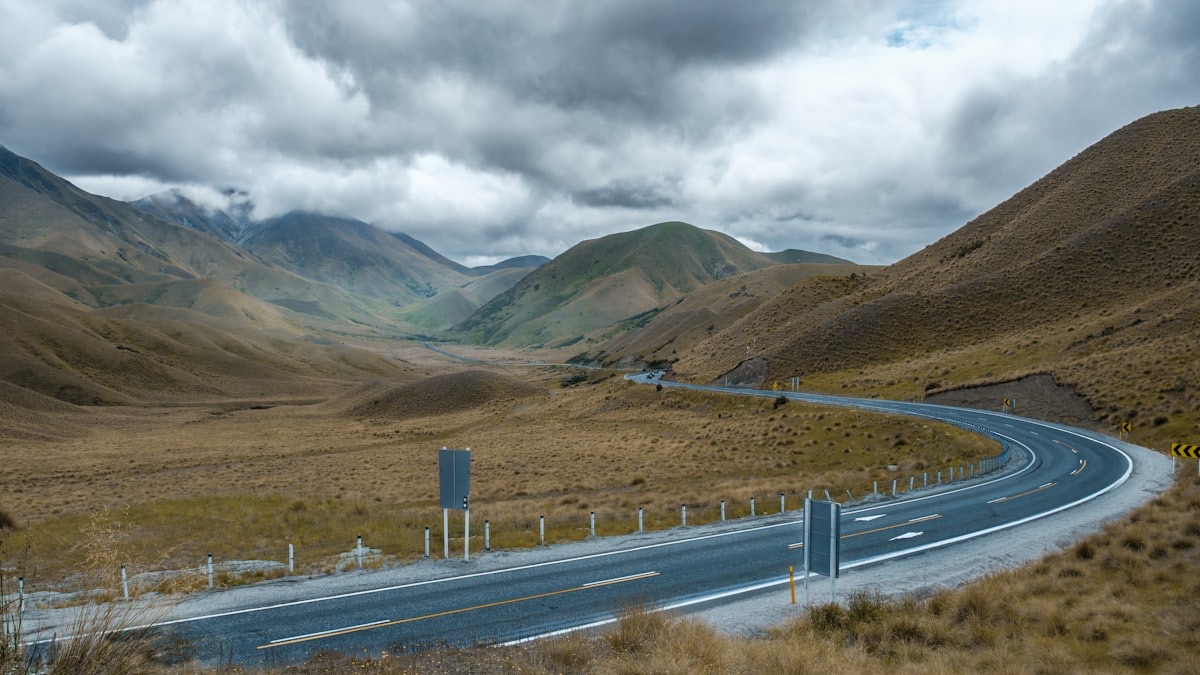
Driving in New Zealand isn't hard, but it's slower and more demanding than most visitors expect — and that gap between expectation and reality is the single biggest cause of stress, missed bookings and crashes for overseas tourers. The roads are spectacular, two-lane, winding and hilly, with one-lane bridges, mountain passes and the odd gravel stretch. In a tall, heavy campervan or motorhome there's a bit more to think about again. Here's what to know before you set off.
The short version
- Keep left — and take extra care pulling out of car parks and viewpoints.
- Distances take longer than they look — plan fewer kilometres per day than at home.
- One-lane bridges are common — the sign shows who gives way; slow right down.
- Passes, gravel and crosswinds all demand extra care in a big rig.
- If you're slow or unsure, pull over and let traffic past — every time. It's the most important habit on NZ roads.
- Don't drive jet-lagged — a lot of tourist crashes happen on day one.
Keep left
New Zealand drives on the left, with the driver seated on the right of the vehicle. If you come from a drive-on-the-right country it takes about a day to feel natural. The danger moments are when your autopilot kicks in: pulling out of a car park, turning at a quiet intersection, or rejoining the road after stopping at a viewpoint. Say "keep left" out loud each time you set off for the first few days — it works.
Distances take longer than they look
This is the big one. New Zealand highways are mostly a single lane each way, winding and hilly — not straight motorway. In a campervan or motorhome you'll average closer to 60 km/h than the open-road 80–90 km/h once you factor in hills, corners, towns and one-lane bridges, so a good rule of thumb is to add roughly 20–30% to the time a standard map app gives you — more again once you include coffee, fuel, lunch and photo stops. A 300 km drive a map calls three hours is realistically four to five.
The classic first-timer mistake is packing too much into each day and arriving frazzled after dark. Aim for 200–400 km and no more than 4–5 hours of driving a day — less early in a trip while you find your feet — and use realistic times rather than dividing distance by 100.
If you're slow or not confident — pull over and let traffic past
One-lane bridges
Many rural roads cross one-lane (single-lane) bridges. A sign before the bridge tells you who gives way: a smaller arrow pointing your way means you give way to oncoming traffic; a larger arrow your way means you have priority — but still check. Slow right down, look for anyone already on or approaching the bridge, and never assume the other driver has seen you. Some bridges are shared with rail; treat those with extra caution.
Mountain passes & steep grades
Touring routes cross alpine passes like Arthur's Pass, the Crown Range, Lewis Pass and the Haast. In a heavy rig:
- Going up, drop a gear early and keep momentum rather than labouring the engine.
- Going down, use a low gear to let the engine brake — don't ride the foot brake the whole way down or it can overheat and fade.
- Use crawler/slow-vehicle lanes where they exist, and pull over to let a queue past.
Gravel (unsealed) roads
Plenty of back roads and routes to remote campsites and trailheads are unsealed gravel (metal) roads. Grip is much lower, braking takes longer, and loose stones can throw a vehicle or chip a windscreen, so slow down well below the open-road limit. Be especially gentle on corrugations, washouts and blind crests in a tall or heavy vehicle. Check your rental contract too — some agreements restrict or exclude unsealed roads, which can void cover if you have an incident.
Wind and tall vehicles
Tall, slab-sided campervans and caravans catch crosswinds badly on exposed coast roads, open plains and bridges, which can start a sway. Slow down in strong wind, keep a firm but relaxed grip, and brace for a gust when you pass a truck or come out from behind shelter. Because the forecast headline wind speed hides the gusts that actually move a high-sided vehicle, check a briefing that reports gusts before exposed legs.
The Cook Strait ferry
Crossing between the North and South Islands means the Cook Strait ferry (Wellington–Picton, about 3.5 hours, Interislander or Bluebridge). You book by vehicle length, and summer sailings fill up — there's a full rundown in the Touring New Zealand FAQ.
Winter & alpine conditions
From roughly May to September, alpine passes and the inland South Island can get ice, snow and black ice, especially in shaded corners and early morning. Carry and know how to fit snow chains if you're heading to the likes of the ski areas or high passes — they're sometimes legally required — slow down on frosty mornings, and don't brake or steer sharply on ice. Check road status before alpine routes in winter.
Don't drive tired
A meaningful share of crashes involving overseas drivers happen in the first day or two, when long-haul jet lag meets unfamiliar roads. Rest before you take the wheel, swap drivers, and pull over the moment you feel drowsy. No view is worth pushing on exhausted.
Check the wind before you drive → The free Touring Brain weather briefing flags gusts at cab height — not just the headline wind speed — so you can decide whether to drive, wait or reroute. Pair it with the pre-departure checklist.Sources & further reading: road rules, safety and live road conditions — NZTA Waka Kotahi and the NZTA Journey Planner. Always check conditions before alpine or remote routes. Last reviewed 19 June 2026.
This guide is general safety information for visitors, not formal driver training or legal advice, and conditions change quickly. Always follow road signs, current speed limits and NZTA Waka Kotahi guidance, check road and weather conditions before alpine or remote routes, and drive to the conditions on the day. Touring Brain is independent and not affiliated with NZTA or any rental operator.