
Touring New Zealand: your questions answered
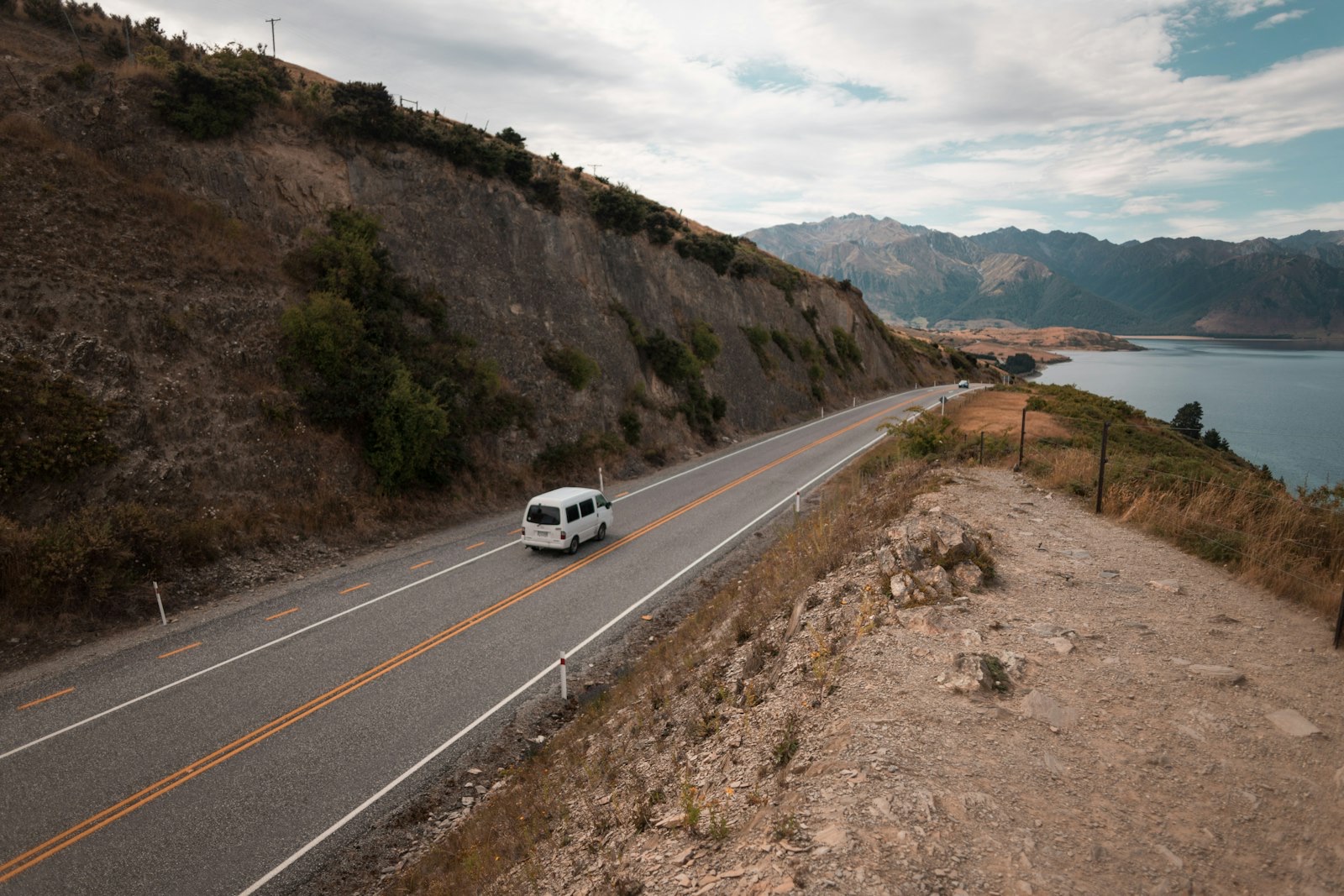
New Zealand is one of the great places in the world to tour by caravan, campervan or motorhome — but a few things work differently here, and they're the things that trip up first-timers and visitors picking up a rental. This is a plain-English answer to the questions we hear most: freedom camping, dumping waste, crossing between the islands, fuel, water and what the driving is actually like.
The short version
- Freedom camping is allowed in places — but only some places. The rules are set council by council, and most public sites need a certified self-contained vehicle.
- From 7 June 2026, self-containment needs a fixed toilet (the new green warrant). A portable toilet alone no longer qualifies.
- Empty all waste — toilet and sink water — only at a dump station. They're everywhere and mostly free.
- The islands are joined by the Cook Strait ferry (Wellington–Picton, ~3.5 hours). Book ahead in summer and book by your vehicle's length.
- Diesel is cheaper at the pump but pays Road User Charges on top. Petrol has the road tax already included.
- Distances take longer than they look. Roads are windy and hilly — plan for low average speeds.
Freedom camping: where can I actually stay?
"Freedom camping" means staying overnight on public land outside a campground. It's legal in many spots, but it's controlled by each district council's own bylaw, so what's fine in one region is banned in the next. The safest approach is simple: only stay where it's clearly permitted, and read the sign.
Good sources of legal sites:
- Council-signposted freedom-camping areas — look for the official sign that says camping is allowed and whether self-containment is required.
- Department of Conservation (DOC) campsites — hundreds of low-cost sites, from basic to serviced, often in spectacular spots.
- NZMCA parks — members-only parks and "park over property" stays, great value if you join.
- Apps — CamperMate, Rankers and WikiCamps map permitted sites, dump stations and water taps, with reviews.
Do I need a self-contained vehicle?
For most public freedom-camping sites, yes. Many councils and DOC areas only permit overnight stays in a certified self-contained vehicle — one that can carry its own fresh water, hold its own waste water, and let you use a toilet on board for at least three days.
The big change for 2026: from 7 June 2026 the old blue warrant is replaced by the new government-backed green warrant, which requires a permanently fixed toilet. A portable toilet on its own no longer qualifies. If you own your rig this matters a lot; if you're in a rental it's almost certainly already sorted. We cover exactly what's changed, and a self-check, in the Green Warrant 2026 guide.
Where do I empty the toilet and waste water?
At a dump station — never anywhere else. New Zealand has hundreds of them, most of them free, at holiday parks, service stations, public toilet blocks and i-SITE visitor centres. They're mapped in CamperMate and the NZMCA app.
Both your toilet cassette and your grey (sink) water go down the dump point. Tipping waste water onto the ground, into a garden or down a stormwater drain is illegal, attracts fines, and is the number-one reason councils keep tightening freedom-camping rules. Empty whenever you pass a dump station rather than waiting until you're full.
Where do I get fresh drinking water?
Most dump stations and all holiday parks have potable (drinking) water taps, and i-SITEs and public facilities often do too. Apps flag which taps are safe to drink. Fill your fresh-water tank whenever you get the chance — especially before heading into a remote area like the West Coast, Catlins or East Cape. Town tap water is safe to drink; don't drink untreated water straight from streams or lakes, as it can carry giardia.
Crossing between the North and South Islands
The two main islands are linked by the Cook Strait ferry between Wellington and Picton, run by two operators, Interislander and Bluebridge. The crossing takes about 3.5 hours and is a scenic trip in its own right through the Marlborough Sounds.
| What to know | Detail |
|---|---|
| Route | Wellington ⇄ Picton |
| Operators | Interislander & Bluebridge |
| Crossing time | ~3 hours 30 minutes |
| How vehicles are priced | By length (and height for tall motorhomes) — a car towing a caravan is charged on the combined length |
| Booking | Book well ahead Nov–Mar; vehicle space sells out in summer |
Measure your rig before you book and enter the right length — turning up longer than booked can mean missing the sailing. A caravan or large motorhome is harder to squeeze onto a full summer ferry at short notice than a car, so lock crossings in early and build your itinerary around them.
Fuel, and what "Road User Charges" means
Two fuels matter for touring: petrol and diesel. Diesel looks much cheaper at the pump, but there's a catch that surprises visitors:
- Petrol has the road tax already built into the price you pay at the pump. Nothing more to do.
- Diesel is cheaper per litre because the road tax isn't included. Instead, diesel vehicles must pay Road User Charges (RUC), bought in advance in 1,000 km blocks. A light diesel vehicle (under 3,500 kg) pays roughly $76 per 1,000 km plus a small admin fee.
If you're renting a diesel campervan, the operator normally on-charges RUC at around 8–9 cents per kilometre on top of the daily hire rate — so it's not free mileage, and you should budget for it. Fuel is also dearer in remote areas and parts of the South Island, so fill up in main towns rather than waiting for the next small settlement. Most petrol stations take cards and many are pay-at-pump after hours.
What's the driving really like?
Not difficult — but slower and more demanding than most visitors expect, and that's the single biggest cause of stress and incidents. Keep these in mind:
- Keep left. If you're from a drive-on-the-right country, it takes a day to feel natural — be extra careful pulling out of car parks and at intersections.
- Distances take longer than they look. Highways are mostly two-lane, winding and hilly, so a 300 km drive can be four to five hours, not three. Don't over-pack your days.
- One-lane bridges are common, especially rurally — the sign shows who gives way. Slow right down.
- Wind and passes. A tall caravan or motorhome catches crosswinds on exposed roads and coastlines; take mountain passes gently in a low gear.
- If you're slow or not confident, pull over and let traffic past — every time. A queue building behind a campervan is the classic trigger for risky overtaking; use the slow-vehicle bays, there's no shame in it. (More in Driving in New Zealand.)
- Don't drive jet-lagged. Plenty of crashes involve overseas drivers on day one. Rest first.
New Zealand weather also changes fast, particularly around the mountains and on the coast. Check a forecast that's built for big, wind-sensitive vehicles before each leg with the free Touring Brain weather briefing, which flags gusts at cab height rather than just the headline wind speed.
A few more first-timer FAQs
Where can I find campsites in New Zealand?
Campsites in New Zealand range from free council and DOC sites to fully serviced holiday parks. The quickest way to find camp locations near your route is a map-based search: the free Touring Brain camp finder brings together DOC, council and holiday-park campsites across the country, and apps like CamperMate and Rankers add user reviews. Always check whether a site needs a self-contained vehicle before you rely on it for the night.
Holiday parks vs freedom camping — which should I use?
Mix both. Holiday parks (Top 10, Kiwi Holiday Parks, and many independents) give you powered sites, hot showers, laundry, kitchens and dump facilities for a nightly fee — worth it every few days to recharge, refill and clean up. Freedom camping and DOC sites keep costs down and put you in beautiful spots in between.
Is there mobile coverage everywhere?
No — towns and main routes are well covered, but coverage drops out in remote valleys, on the West Coast and through the back country. Download offline maps and your camping apps' data before you head into those areas, and don't rely on having signal to find a site at dusk.
Can I just turn up, or should I book?
Over summer (roughly December to February) and around public holidays, book ferries and popular holiday parks ahead — they fill up. Outside peak season you can be far more spontaneous.
Renting a campervan or motorhome — anything to plan?
At pickup, check the van already holds valid self-containment certification and confirm whether road user charges are included or on-charged. After that, the biggest tip for a first New Zealand motorhome journey is simple: don't over-pack your days. Map a realistic itinerary first — the free Touring Brain route planner gives honest driving times for a loop or A-to-B trip, so your motorhome rental itinerary matches what you can comfortably drive.
How long should a New Zealand campervan trip be?
However long you've got — but a useful rule of thumb is roughly one island per 10–14 days at a relaxed pace. New Zealand looks compact on a map, yet winding roads and the sheer number of worthwhile stops mean most people underestimate it. With two weeks, pick one island and do it well rather than rushing both; with a month you can cover both comfortably.
Planning the route itself? →Use the free Touring Brain route planner to map a loop or A-to-B trip with realistic driving times, then run the pre-departure checklist before you roll.
Sources & further reading: roads and conditions — NZTA Waka Kotahi; campsites and freedom camping — Department of Conservation; weather — MetService. Always confirm current details before you rely on them. Last reviewed 19 June 2026.
This guide is general information to help first-time tourers, not legal, safety or compliance advice, and rules, prices and charges change. Always confirm current freedom-camping bylaws with the local council, ferry details with the operator, and road user charges with NZTA Waka Kotahi. Touring Brain is independent and not affiliated with DOC, NZMCA, the ferry operators or any council.